An Interview With Emily Lacy
 What is folk?
A lot of what folk is about is a sense of empowerment, a sense of tradition and making due and experimenting. There are all these songs that exist that no one knows where they came from. They have a structure and resilience and pattern that just persists through time without an author. That’s magical. These things are passed down in an organic or anonymous way like an ancient chant. That’s one aspect that I find attractive. You can be a part of something that is bigger than yourself. You can be part of this pattern of folk music and culture. The other side that is beautiful is that you are not just regurgitating things from the past. It’s about participation. You can participate in these old songs and structures. You can rewrite an old song with new words in a more contemporary way. You can change things to fit your own terms or you can completely write your own material. There’s not this sense of baggage that other musical traditions have. You don’t have to be a virtuoso like in classical music. You can jump right in and begin creating yourself and it’s empowering. I don’t think I could have ever began to write songs if it hadn’t been for folk mentality, and there’s a big crossover with punk. Dive in and participate.
What are you doing?
It’s been a crazy year working a lot with museums and experimenting with different modes of playing. Playing normal length shows or for hours and hours with little or no audience. It’s been pretty wild journey. This LACMA project for two months in the winter was a very intense undertaking. I played for almost 160 hours total improvising longer-form stuff. After that I wanted to get back into writing songs that were 2 to 3 minutes long. I wrote a lot in March and more in June and I just spent quite a bit of time rehearsing and recording new songs. It’s been kind of a lot of output and trying to get used to living in one place. I haven’t really been living anywhere the last few years so this, now, has allowed for more production.
But what are you doing, that is, in making music?
Music has an immense spiritual potential. One of the reasons I am so dedicated to music is that the music I really love is like a faith or religion to me. I am very affected by listening to music and then in turn performing music is this intense thing for me. I go into a trance. The music that I make is really about being in the world. When I perform for people I want to give them something. I want to bridge the gap with people and connect on a level that is both personal and universal. Folk music is really important to me. That’s how I started playing music, realizing that you can teach yourself things. That is part of what folk means to me. You can teach yourself to play or sing or write songs. Folk is my jumping off point musically. Another thing I am interested in is temporality and how can I play with people’s experience of time. That’s why I use the pedal a lot. When I make an album I think about how an album is like a movie. I have background in visual arts so I think of the environment, the experience a person can have and how I can shape it as a whole. I want to produce experiences for people. Also, music is my way of getting through the world. I am too sensitive for my own good, a little too fragile, a little too damaged, but I get strength from performing.
But performing is such an exposure.
Maybe performance is a way of accepting, through the exposure you accept all the damage and all the pain. Here it is, I am embracing it and making something out of it. I played a show the other night and I was so tense all day, not about the show but about the universe, everything. I was late to the show. You coulda lit a match on me I was so bothered. I played and then I was the happiest person sitting there, like I just got a massage. There is something to the musical release of letting go and being there doing it. What I think is bizarre is that it’s all very real to me. I don’t feel like I am ever playing or acting at being moved, it’s like these emotions are brought up and it’s crazy. When I sing sometimes, I think I am going to cry, and I haven’t cried yet in front of an audience. That seems terrifying.
How did L.A. come to feel like home, the right place for you right now?
One of the things I love about this place is that I feel there is this spirit that you can start your own space. You can get a storefront and make a venue. You can start a label. Even though it’s one of the biggest cities, there is a spirit here that you can constantly begin new investigations and discoveries within culture. Especially in Echo Park or Highland Park and their surrounding areas. There’s a spirit of “let’s discover.” That’s one part to it. Results or causes of that are a really strong punk culture and an underground folk culture. The third part for me is this tradition of conceptual art. The big attraction is those three things thriving here and blending together. I work a lot with Machine Project and spaces like Machine are places where these things can intermingle and crossover and become hybrids of each other. L.A. is this safe and friendly and healthy place for these things to grow and thrive. I feel in my heart it has something to do with how much space we have here and the good weather, and the kind of casual culture. The dominant image has always been about really produced images, through classical Hollywood cinema and the visual of the Westside, but these pockets on the Eastside are these thriving almost secret places where people can do whatever they want. I’ve tried to live in NY and other places and I have never felt that openness for starting something new that I feel here.
—Daiana Feuer
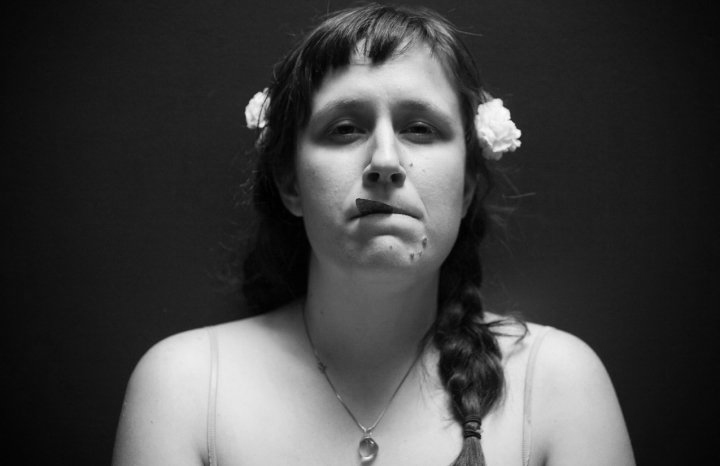
photo by Marianne Williams
Leave a Reply
Recent Posts
Sponsors
 |
 |
 |
 |
 |
 |